


Fitting 2TB into a microSD: The Engineering Behind the Speed Upgrade
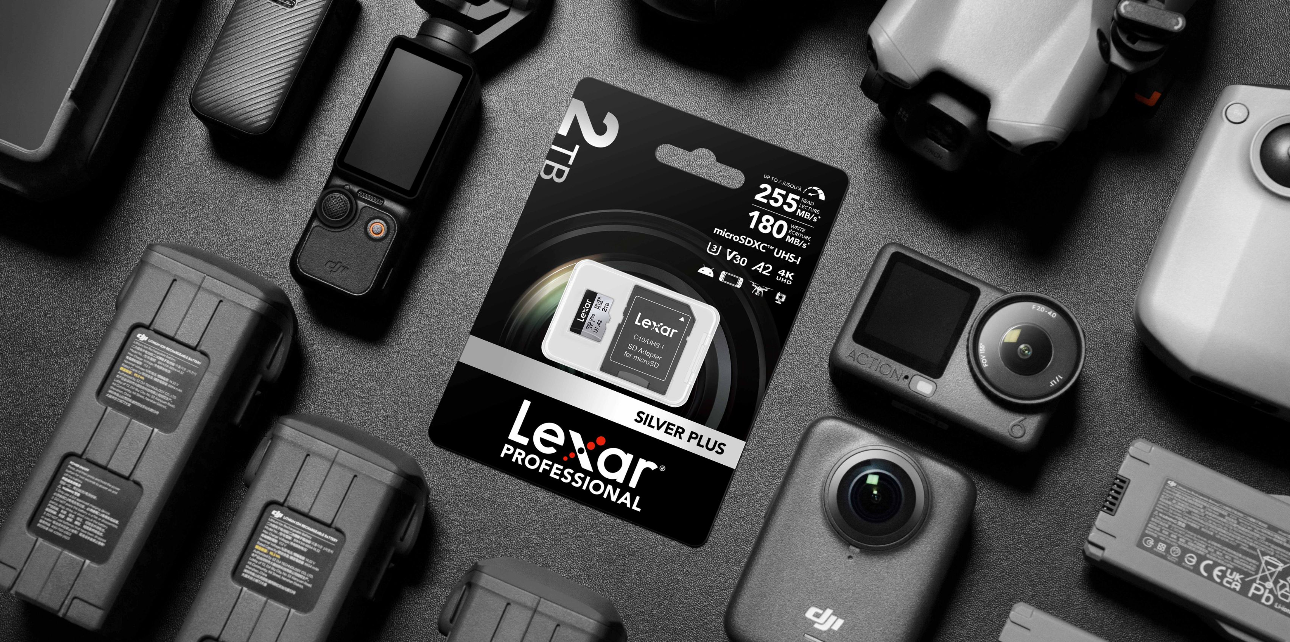
There is something quite remarkable about a 2TB microSD card. Hold one between your fingers, and you are holding the equivalent of approximately 140 hours of HD video, tens of thousands of RAW photographs, or an entire library of downloaded games - all contained within a piece of plastic the size of a fingernail.
However, for professional drone pilots, action camera operatives and handheld gaming enthusiasts, a card such as the Lexar Professional SILVER PLUS microSDXC UHS-I has a very practical function, which will get rid of the single most significant bottleneck from a long shoot - running out of space at the most inopportune time itself.
This article lays bare how engineers managed to squeeze 2TB of dependable, high-speed storage into a form that has seen hardly any change in its actual physical size since it was standardised in the early 2000s, and why that achievement matters for the way you work in the field.
A Brief History of Cramming More Into Less
The microSD cards store their data in NAND flash memory - a sort of non-volatile store that retains data even if the power is turned off. In the very first memory cards, data was stored one bit per cell: a cell was either charged (1) or empty (0). This single-level cell (SLC) approach was very fast and also quite reliable but horribly inefficient in physical space itself.
The industry's solution was to give each cell the capacity to hold more data itself. Multi-level cell (MLC) technology introduced 2 bits per cell, triple level cell (TLC) pushed this to 3 bits and quad level cell (QLC) NAND - the technology now powering high-capacity consumer cards itself - will hold 4 bits in each cell itself. In practical terms, this means the very same amount of silicon can hold eight to sixteen times as many data sets itself as it could back in the SLC era.
But raw bit density alone isn't sufficient. The second technological revolution was switching from flat, two-dimensional memory arrays to three-dimensional stacked architectures. The modern 3D NAND flash stacks memory cells vertically - layer upon layer - rather than trying to continue shrinking them on a flat plane.
Researchers at Princeton's Plasma Physics Lab themselves note that the main manufacturing problem is etching those very narrow, very deep vertical holes right through a massive number of alternating layers of silicon oxide and silicon nitride using the most precise cutting methods available. The more layers a manufacturer can stack reliably, the more data itself will fit into the very same tiny physical footprint.
What Makes 255 MB/s Possible in a UHS-I Card
Speed really gets into its nuances here - and where a card like the Lexar SILVER PLUS really stands out.
The UHS-I (Ultra High Speed) interface is the standard electrical specification found in almost all modern microSD devices. It will have a theoretical maximum bus speed of about 104 MB/s for SDR104 mode. So how does the Lexar SILVER PLUS manage read speeds of up to 255 MB/s when used with the Lexar RW360 reader?
Controller and parallelism
The answer really lies mainly in the card's internal controller chip itself and how it manages parallel access to several NAND dies. A modern high-capacity microSD card contains quite a few NAND flash packages.
A really clever controller can read from many dies simultaneously - a technique called interleaving - effectively multiplying throughput well beyond the capability of any one die alone. The controller is also responsible for wear-levelling (spreading writes evenly over cells to really extend the card's lifespan), error correction, and data caching.
The Role of the Card Reader
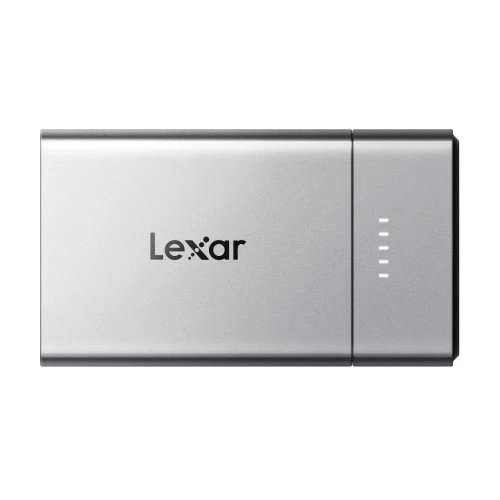
The 255 MB/s figure given to the Lexar SILVER PLUS is very particularly achieved when the card is used with the Lexar RW360 card reader. This is really important as UHS-I host interfaces in cameras, drones, and consoles are normally implemented fairly conservatively, prioritizing compatibility and power consumption over peak bandwidth.
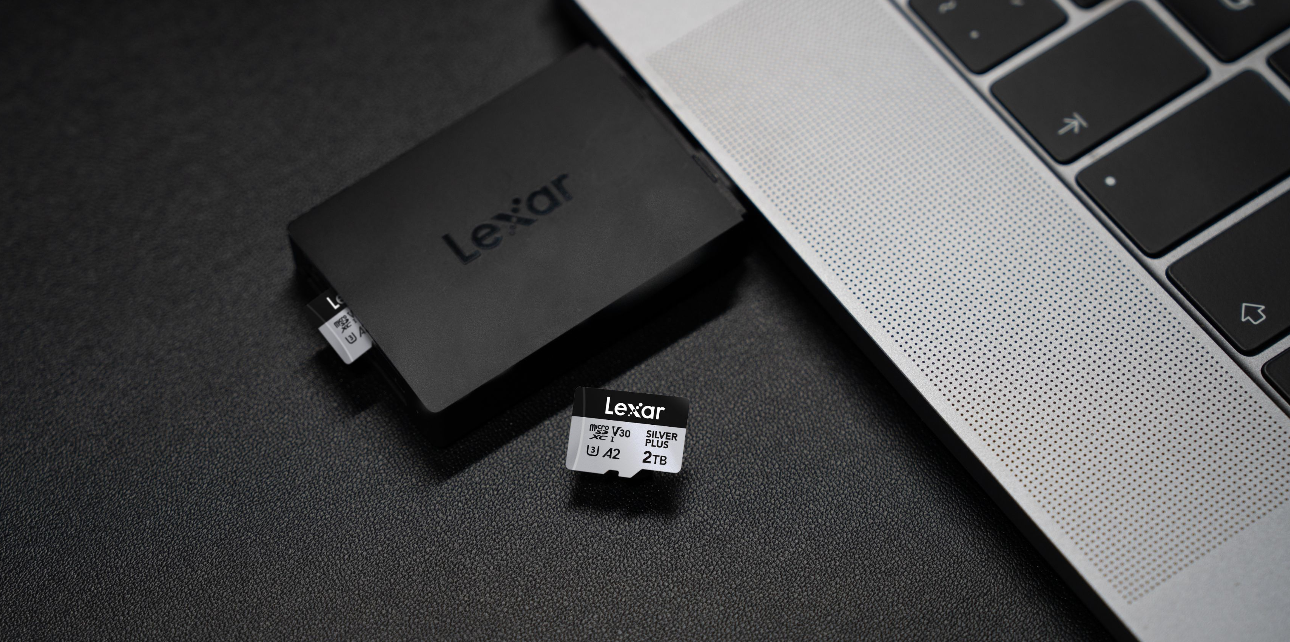
A dedicated high-performance reader truly exploiting the card's capabilities is how you unlock those really amazing transfer speeds during offload - the time spent moving your footage from card to editing machine.
For in-camera recording, what matters more is the sustained write speed: the Lexar SILVER PLUS 2TB can give you write speeds of up to 180 MB/s and carries a V30 video speed class rating. This will guarantee a minimum sustained write speed of 30 MB/s under real-world recording conditions - comfortably above the data rate requirements of 4K 60fps video.
Why 2TB? The Real-World Storage Maths of a Long Shoot
The storage requirements of modern creative projects really get constantly underestimated until you're right there in the field with a drone and an estimated two hours of flight time planned over a whole afternoon.
Video footage
Think about these numbers. A 32 GB card will store just about 30 minutes of 4K footage at 60 frames per second at quite typical H. 264 bitrates.
If you have 2TB available and you are a filmmaker shooting in 4K 60fps at typical bitrates, you are looking at about 33 hours of uninterrupted recording time. Really speaking, this means entire days of shooting - at various resolutions, with slow-motion sequences and backup takes too - can be recorded without ever having to change out your cards.
Fewer card swaps means fewer places where you can go wrong, fewer moments where you will be rummaging around in poor light conditions, and less chance of losing your footage because someone handled the card quite carelessly.
Gaming and app storage
The same kind of arithmetic would apply to an entirely different situation: a handheld gaming console. The Nintendo Switch and the Steam Deck - both of which the Lexar SILVER PLUS has been tested on - will normally deliver titles of over 50GB each game.
A dedicated gaming collection - say a dozen or so AAA titles and a few smaller ones - can all too easily get itself over 500GB. If a Steam Deck is being used as a mobile workstation on the road, then 2TB basically means your entire software library stays on board rather than requiring endless downloads over a spotty hotel Wi-Fi connection.
Built for the Conditions You Actually Shoot In
A card that fails in the field is a whole lot worse than one that was never purchased. That's why the endurance engineering in the Lexar SILVER PLUS is right up there with its speed and capacity specs.
Waterproof and temperature-proof
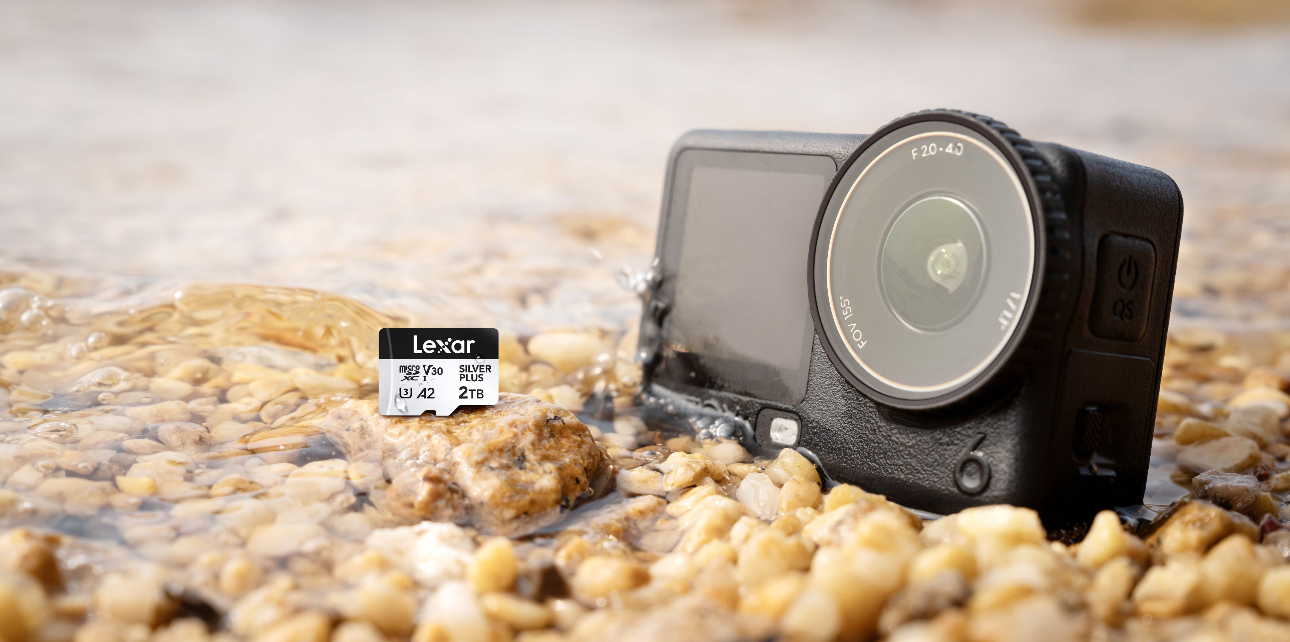
The card carries an IPX7 waterproof rating - meaning it stays alive submerged in up to a meter of water for 30 minutes. Its operating temperature range is -25°C to 85°C and can be safely stored at temperatures as low as -40°C. For drone operators working in alpine environments, action camera users on water sports expeditions or filmmakers working in desert heat, these aren't edge cases - they're perfectly routine conditions.
Mechanical resilience
The SILVER PLUS has been thoroughly tested to endure 1500G shock resistance and drop protection from heights up to 1. 5 meters. It's resistant to vibration across the 10 to 2000 Hz range - vital for any camera mounted on a drone or vehicle.
The card is also X-ray proof up to 100 mGy (equivalent to an airport security scanner exposure) and anti-magnetic up to 15,000 Gauss, offering protection against the kind of incidental field hazards most photographers never think about until it's too late.
Perhaps the most practically useful thing about the card is that it's rated for up to 10,000 plug-and-unplug cycles. For a professional transferring footage daily, that represents many years of constant use before wear would even be a problem.
Compatibility: The Quiet Engineering Challenge
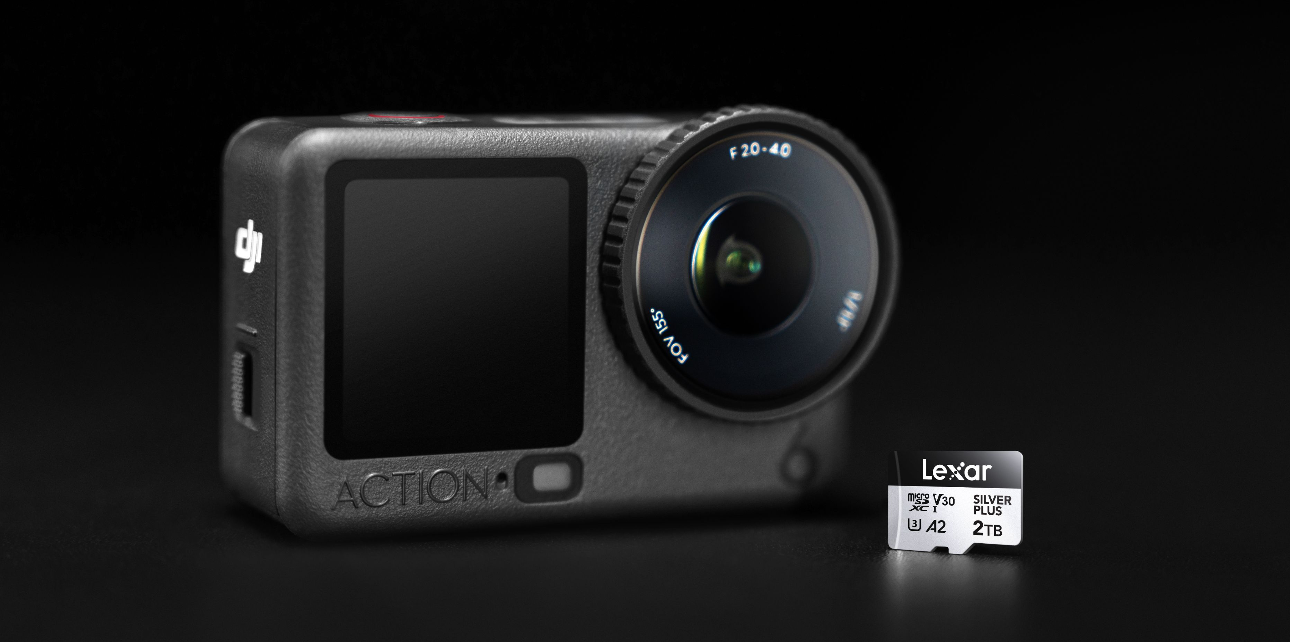
Achieving 2TB is quite a feat, but a card that only works in just a few devices is rather limited in value. Lexar has invested an awful lot in compatibility testing through their Lexar Quality Labs - facilities that test thousands of actual digital devices - and the SILVER PLUS has been very carefully validated for use with cameras and controllers from DJI, Insta360, GoPro, Nintendo Switch (first generation) and Steam Deck.
Data Recovery and Long-Term Peace of Mind
The last bit of the professional-grade package is what happens if things go wrong. Lexar bundles a license to their Lexar Recovery tool with every SILVER PLUS card - software that is designed specifically to get back files that have been accidentally deleted.
This is no trivial feature: accidentally deleting files is actually one of the most common causes of losing footage, and having a dedicated recovery method set up within your purchase is a really useful safety net - especially for anyone who's ever had to format a card after a shoot by accident.
The card itself is supported by a limited lifetime guarantee - in Germany, it's covered for 10 years and in regions that don't endorse lifetime warranty terms either.
For an item of equipment likely to be seen accompanying a photographer or filmmaker over years of professional work, the guarantee will reflect Lexar's 29-year track record as a reliable memory solution provider.
The Bottom Line: Why Capacity and Speed Together Matter
It would be easy to think that a 2TB microSD card is unnecessary in almost all cases, except for the truly extreme use cases. However, the engineering story behind it acts as a reminder that advancements in storage technology are usually not merely about a device having the highest capacity itself - they are actually about removing the friction from the creative workflow process itself.
For a drone pilot on a 3-day shoot in a remote location, the value of a single 2TB card is the freedom from the anxiety that comes from running out of space. For a handheld gamer who travels very often, it is the convenience of their entire library in just a single slot. For an event videographer recording continuous 4K at 60fps all day long, it is the confidence that every moment will be captured flawlessly, without interruption.
The Lexar Professional SILVER PLUS microSDXC UHS-I achieves this with read speeds of up to 255 MB/s and write speeds of around 180 MB/s, the V30 video class certification, and an entire set of tools for extreme-condition durability, plus rigorous real-world compatibility testing.
It really is the result of a lot of little advances over many years in NAND flash engineering - 3D cell stacking, multi-level storage, and an intelligent controller design - all coming together into something that fits perfectly and effortlessly into your shirt pocket itself.
The best storage system is the one you will really never have to worry about at all. At 2TB, that threshold has finally been achieved for microSD itself.