


Is Your Memory Card Ready for the 2026 Tournament?
The whistle blows. The net rippling in the water. Eighty thousand people are on their feet. You raise your camera – and the screen displays those words all fans dread seeing during a match: "Memory Full".
As we approach the 2026 Tournament - one of the largest and best football events in the world - we should stop and ask ourselves a simple but important question: Is my memory card ready to handle the demands of what I am planning to do?
This guide breaks down what you genuinely need from a card at a live sporting event, explains the speed ratings that matter (and the ones that don't), and points you toward the right Lexar options for your camera and shooting style.
How Much Storage Do You Really Need at a Football Tournament?
Most people don't give adequate thought to this aspect, often underestimating by a considerable margin. We'll explain why below.
At a standard 90-minute football match, an enthusiastic fan with a medium-grade camera using burst mode to capture action-packed photographs can take 300-600 photographs. Adding a few slow-motion videos, some panoramic shots of the crowd and 20 minutes of 4K video for social media updates means that just one day at the stadium can require anywhere between 30GB and 80GB of storage capacity, or even more.
If you plan to watch multiple group stage games, a knockout game or travel between cities over several weeks, your memory card needs will add up quickly. Here's how much storage various shooting techniques would need:
● 4K video shot at 30 frames per second: approximately 1GB per minute – meaning a 10-minute clip uses 10GB
● 4K video shot at 60 frames per second: around 1.5-2GB per minute – the biggest challenge to your memory card
● Raw still images: 20-50MB per photo depending on the size of your camera's sensor
● JPEG photographs taken in burst mode: 5-15MB per photo – leading to rapid increases in storage requirements
A real-world note: Cloud backup options might seem like a good idea, but Wi-Fi at large stadiums (even those with 60,000+ attendees) is often spotty and unreliable. So, don't count on it. Good memory cards, however, will reliably store your moments.
Speed Counts Just As Much As Capacity
When buying memory cards, we pay a lot of attention to the available capacity. However, speed ratings receive little to no attention – a significant oversight, particularly when it comes to sports photography.
All cameras come with an internal buffer - a bit of fast memory used to store the photos that are being captured before they are transferred to the memory card. If you're taking photos in continuous shooting mode (like when a player scores a goal), your camera's buffer fills up quickly.
If your memory card can't write fast enough to clear out existing files, your camera freezes up. It freezes up! In football photography, a brief pause of just half a second can mean the difference between getting a photo of the goal being scored versus catching the back of someone's shirt as they celebrate immediately after.
This is where speed class ratings prove their importance. There are two important ones to know for shooting in tournaments:
● V60 – minimum guaranteed sustained write speed of 60MB/s. Sufficient capacity to record 4K videos and perform confident burst shots on most mid-range and enthusiast-level cameras.
● V90 – minimum sustained write speed of 90MB/s. The benchmark speed for professional cameras capturing RAW burst shots, 6K and 8K video resolutions, with no chance of buffer anxiety.
Cards Built for Moments Like This: Lexar SD 2000x and SD 1800x
For photographers using entry-level to mid-range digital cameras (DSLRs, compact system cameras, or enthusiast-grade mirrorless bodies with an SD card slot), Lexar provides two GOLD Series cards offering good shooting options and budget choices.
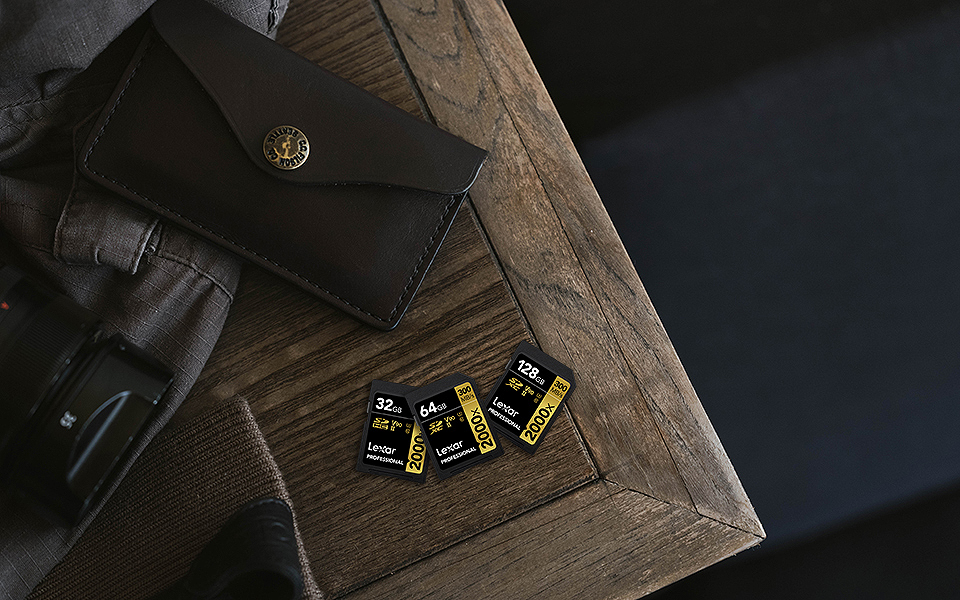
Lexar Professional SD 2000x GOLD Series – For Fans Who Refuse to Miss a Frame
The Lexar Professional SD 2000x is the best among all the SD cards offered by Lexar and is designed for photographers seeking to maximize their camera's capabilities.
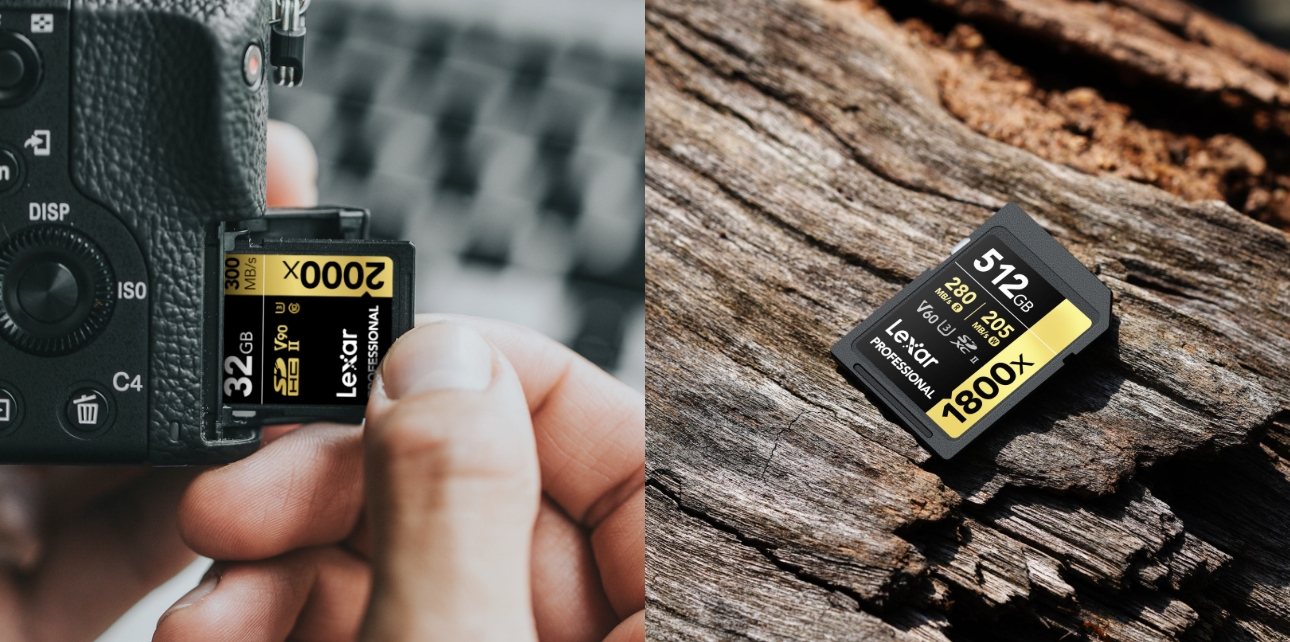
Equipped with read speeds of up to 300MB/s and write speeds of up to 260MB/s based on UHS-II technology, this card offers brilliant features. While they might seem like mere specs, these speeds actually make a difference in your ability to take great photos.
Backed by V90 Video Speed Class rating and UHS Speed Class 3 (U3) certification, the SD 2000x can handle continuous burst shots and shooting RAW + JPEG files simultaneously without any delay.
In practice: during any high-drama moment, like a striker breaking through and triggering non-stop clicking of the camera's shutter button, the Lexar SD 2000x doesn't falter. It clears the camera's buffer quickly enough to allow for non-stop clicking of the shutter, giving you a complete sequence of moments instead of just occasional pictures.
This card supports capturing extended Full HD, 4K and 8K cinematic quality videos, regardless of whether you're creating a panoramic time-lapse of the football field prior to kick-off or shooting the crucial last few minutes of a closely contested match. Lexar SD 2000x is available in capacities ranging from 32GB up to 512GB, featuring a limited lifetime warranty.
Lexar Professional SD 1800x GOLD Series – The Smart Choice for Versatile Everyday Shooting
Fans who shoot mostly 4K video and photos but don't need top-tier burst mode capabilities can enjoy excellent performance and great value with the Lexar Professional SD 1800x.
Offering excellent read speeds of up to 280MB/s and write speeds of up to 210MB/s (for 64GB-128GB capacities) along with a V60 Video Speed Class rating, the 1800x provides ample capacity to shoot smooth, uninterrupted 4K videos and capture rapid photographs from DSLR and mirrorless cameras.
Like the 2000x, it features advanced UHS-II technology with UHS Speed Class 3 (U3) to ensure good compatibility with cameras and card readers equipped with the high-speed UHS-II interface. Even if you're using an older camera, the 1800x is backward compatible with UHS-I devices and delivers the fastest speeds possible via UHS-I.
Featuring high-speed transfer capabilities suitable for digital SLR and mirrorless cameras, the 1800x has been put through rigorous quality tests at Lexar’s Quality Labs with over 1,100 different digital devices, including Canon, Nikon, Sony, Fujifilm, and Panasonic cameras. Reliable compatibility checks help you tackle challenges in tough environments like big stadiums, where there's no chance to troubleshoot compatibility issues between shots.
Which one should you choose? If your camera supports UHS-II and you frequently shoot fast burst sequences or RAW images, consider the Lexar Professional SD 2000x. If you shoot 4K videos and JPEG stills, occasionally need burst shooting, and want a fast yet affordable option, we recommend the SD 1800x.
Your Shot. Your Story. Don't Let Storage Be the Reason You Miss It.
The 2026 Tournament isn't the kind of event that comes around often. The atmosphere, the color, the moments you'll want to hold onto – none of them get a second take.
With meticulous preparations needed to attend big football events—like getting tickets and travel plans—many of us tend to focus less on our camera's memory card until it's too late. A good memory card doesn't make itself known.
It works well during intense 40-frame bursts of shooting, 90 minutes of 4K video recording, hot July afternoons, and cool evening kickoffs. The new Lexar Professional SD 2000x and SD 1800x GOLD Series cards are designed to give you peace of mind without you even noticing.
Whether you're a casual fan with a camera, an enthusiastic photographer, or you simply want to grab every photo opportunity, Lexar's GOLD series card line-up has one that fits your gear. Check out the range of cards at lexar.com and enjoy a memory card that gives you peace of mind ahead of the World Cup!